The Weight of the Mud and the Power of the Bridge: A Sunday Reflection

Today, I sat down and cried while I was watching and reading the story about the harrowing four-day rescue mission by the Sheldrick Wildlife Trust near Kilifi.
Two massive bull elephants had become trapped in the suffocating mud of the tidal creeks. The teams worked tirelessly, battling rising tides and exhaustion. Tragically, one bull didn’t make it. He slipped away just as freedom was within reach.
But his companion, after days of being pinned down, bolstered by IV drips and hauled by a bulldozer through 170 meters of mangroves, was saved. He spent hours standing vigil over his fallen friend before finally making a 35-kilometer trek back to safety.
Why did this story break my heart? Because it’s a reminder that in conservation, every second and every soul counts. But it also reminded me of a different kind of "mud" that elephants get stuck in: Human-Wildlife Conflict. I was wondering how he got stuck in the first place, and maybe it's because the development of communities settling on their migratory corridors is pushing this wildlife towards more dangerous grounds.
From Liabilities to Assets
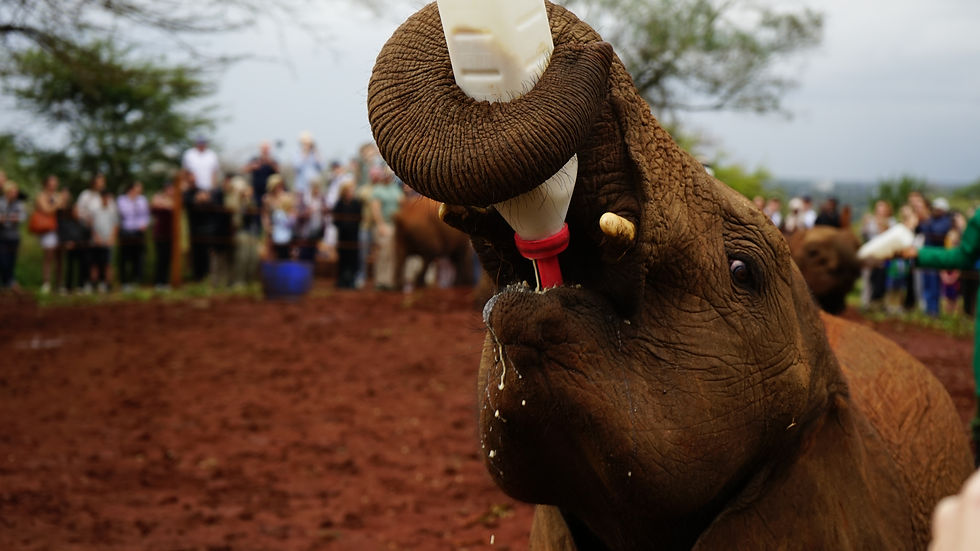
This Sunday as well, while visiting the orphans at the Sheldrick Nursery in Nairobi—where I recently adopted a young elephant - Kaikai found alone at six months old—I couldn't stop thinking about the work of Save The Elephants in Tsavo.
In those communities, elephants were often seen as a "liability"—a threat to crops, a danger to children, and a reason for a farmer to reach for a weapon. But I’ve seen the shift. Projects like the Beehive Fence by the Save the Elephants initiative are turning that liability into an asset.
Farmers are protected by the bees (which elephants instinctively fear).
Farmers gain a new income from "Elephant-Friendly Honey."
The elephant goes from being an "enemy" to a protected neighbor.
And I have been invited to advise on human-wildlife coexistence strategies in East Africa, bridging the gap between community agriculture, biodiversity, and elephant conservation.
My Realization this Sunday
As I look at my orphan elephant and think of the bull saved from the Kilifi mud, I realize that my pivot in 2026 is about exactly this: The Bridge.
We need people who can bridge the gap between the raw, heartbreaking reality of the field and the strategic world of capital and investment. We need to move from "saving" elephants to "valuing" them within our human systems.
This year, 2025, has taught me that the solution lies at the connection between people, plants, and nature. I believe that farmers—when empowered and supported—are the most important stewards of our land.
If we can turn a conflict into a partnership, we don't just save an elephant; we save a community.
As I am counting my blessings this Sunday, I am inviting you to join me in 2026. Let’s build the bridges that ensure no elephant—and no community—is left behind in the mud.
Subscribe to my blog to be updated with my 2026 conservation stories, insights, and new projects.


Comments